

It started with a spreadsheet. That's the part I still can't quite get over — that eleven months of friction between me and Priya, the kind that eventually had us standing three feet apart in a hawker centre not looking at each other, began with a Google Sheet neither of us wanted to open.
We'd been running a small kuih stall together at a coffee shop just off Lorong 8 Toa Payoh for about a year and a half by then. Priya handled the baking — she'd learned from her grandmother, and her ondeh-ondeh sold out faster than anything else on the table. I did the mornings: setup, the till, talking to the regulars, restocking napkins nobody ever asked for but somehow always ran out. It worked because we never really talked about who did what. We just did it.
Which, in hindsight, was the entire problem.
The disagreement that wasn't really about money
The first crack showed up on a Tuesday in September, over something almost embarrassingly small. I'd covered an extra shift because Priya said she had a family thing, and when I brought it up — not even angrily, just mentioning it — she got quiet in a way I hadn't seen before. Not annoyed-quiet. Something heavier.
I let it go. We both did, on the surface. But something shifted after that. She started double-checking the sales log at the end of the day, which she'd never done before. I started keeping a mental tally of who opened and who closed. Neither of us said a word about it out loud. We just got a little more precise with each other, a little less easy.
By November, the precision had turned into distance. Priya would text about stock orders and nothing else. I stopped inviting her for our usual after-close mee pok. It wasn't a fight in the way you'd picture one — no raised voices, no dramatic exit. It was just two people who used to laugh constantly, now speaking to each other like colleagues who'd never quite gotten along.
The worst arguments I've ever had weren't loud. They were the ones where both people just quietly agreed, without saying so, to stop being honest with each other.
My mother, who has an irritating habit of being right, told me to just ask Priya what was going on. I told her it wasn't that simple. Looking back, it absolutely was that simple, and I was the one making it complicated by assuming I already knew the answer — that Priya thought I wasn't pulling my weight, that she resented me, that this was about the stall.
The month we almost stopped being friends
By January it had become something we both quietly accepted as permanent. We still ran the stall together because neither of us wanted to be the one to say we should stop, but we split the hours so we barely overlapped anymore. I'd come in as she was packing up. We'd exchange maybe four sentences.
I remember telling my cousin, Farah, over dinner that I thought I was losing my best friend and I genuinely didn't know why. She asked me the obvious question — had I actually asked Priya what was wrong — and I gave her the same non-answer I'd given my mother. I was scared of the answer. If Priya was pulling away because she'd realised she didn't need me, or because I'd done something wrong I couldn't see, I didn't want to know that for certain. Silence felt safer than confirmation.
That's the part of this story I'm least proud of. I chose not knowing over the risk of an uncomfortable conversation, for four months.
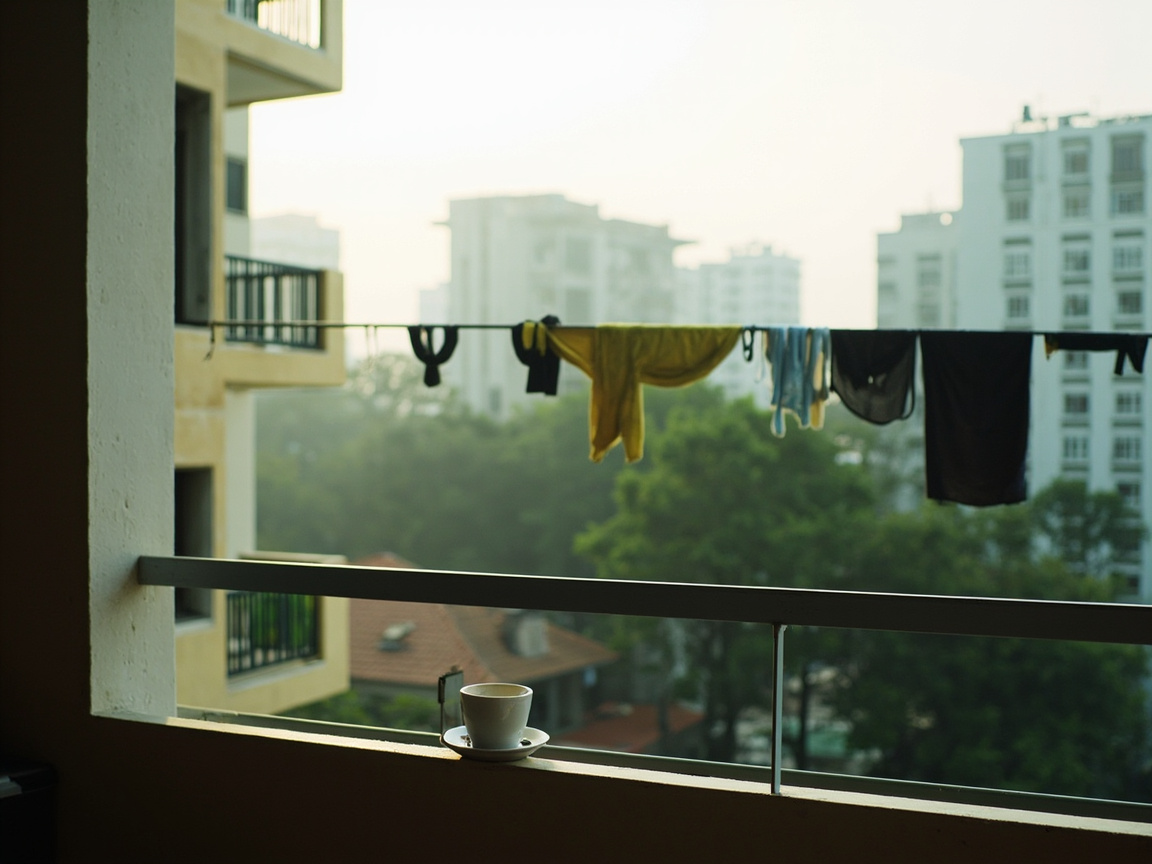
What actually happened
The truth came out sideways, the way these things usually do. In February, Priya's aunt — who sometimes helped out at the stall on weekends — mentioned to me, almost in passing while restocking the peanut sauce, that Priya had been "doing okay considering everything with her mum." I said something vague back, not wanting to admit I had no idea what she meant, and she must have caught something in my face because she stopped and asked if Priya hadn't told me.
Priya's mother had been diagnosed with a chronic kidney condition the previous August — right before that first Tuesday shift I'd covered. The "family thing" hadn't been a one-off. It had been the start of a routine of dialysis appointments three times a week, appointments Priya had been quietly rearranging her whole life around without telling anyone at the stall, because she didn't want to be treated differently, and because — as she told me much later — she was terrified that if she said the word "sick" out loud about her mother, it would somehow make it more real.
The reason she'd started checking the sales log wasn't suspicion of me. It was because she'd started worrying, quietly and irrationally, that if the stall's numbers dipped even slightly, I'd resent covering for her, and she'd lose the one part of her week that still felt normal. The distance I'd read as her pulling away from our friendship was actually her holding on to the stall — and to me — as the one stable thing in a year that had otherwise fallen apart. She just didn't have any capacity left to explain that to anyone, including herself.
I felt something close to grief when I found out. Not because the news itself wasn't hard — it was, and still is — but because I realised how much of that silent, careful, distant year could have been an entirely different four months if either of us had just said one honest sentence out loud in September.
The conversation we should have had five months earlier
I called her that night. Not a text — I was too aware, by then, of how much damage had been done by messages that left room for the wrong interpretation. She picked up on the second ring, which I've since learned means she'd been waiting for someone to ask.
We talked for almost two hours. About her mother, about the appointments, about how tired she was of being the strong one for everyone including me. About how she'd genuinely thought, for a while, that I'd noticed something was wrong and had decided I didn't care enough to ask — which, from her side of that silence, looked exactly like what I'd assumed about her from mine. We'd both spent months protecting ourselves from a rejection that neither of us was actually planning.
I'm not going to pretend the story ends with everything immediately fixed, because that's not how any of this actually works. Her mother is still on dialysis. The stall still has hard weeks. But Priya and I talk now — properly, about the actual things, not around them. We rebuilt something closer to what we had before, except now it has an honesty in it that the old version didn't, because the old version had never really been tested.
What I took away from it
I think about that spreadsheet a lot. Not because it mattered — it never did — but because of how much weight two people can quietly load onto a completely neutral piece of paper when neither of them is willing to say what's actually going on. The disagreement was never really about shifts or sales figures. It was about two people who cared about each other a great deal and were both, for different reasons, too afraid to say so plainly.
If there's a version of this story that's useful to anyone reading it, it's probably this: the quiet version of a conflict is not the gentle version. It's often the more dangerous one, because it gives both people just enough room to build an entire false story about the other person, brick by brick, without ever checking if any of it is true. Priya and I lost almost half a year we didn't need to lose. I'd rather tell you that plainly than pretend the ending was clever. It wasn't clever. It was just two exhausted people who finally said the thing.
The stall is still there, by the way, if you're ever in Toa Payoh around 8am. Priya's ondeh-ondeh still sells out first. I still do the napkins nobody asks for.