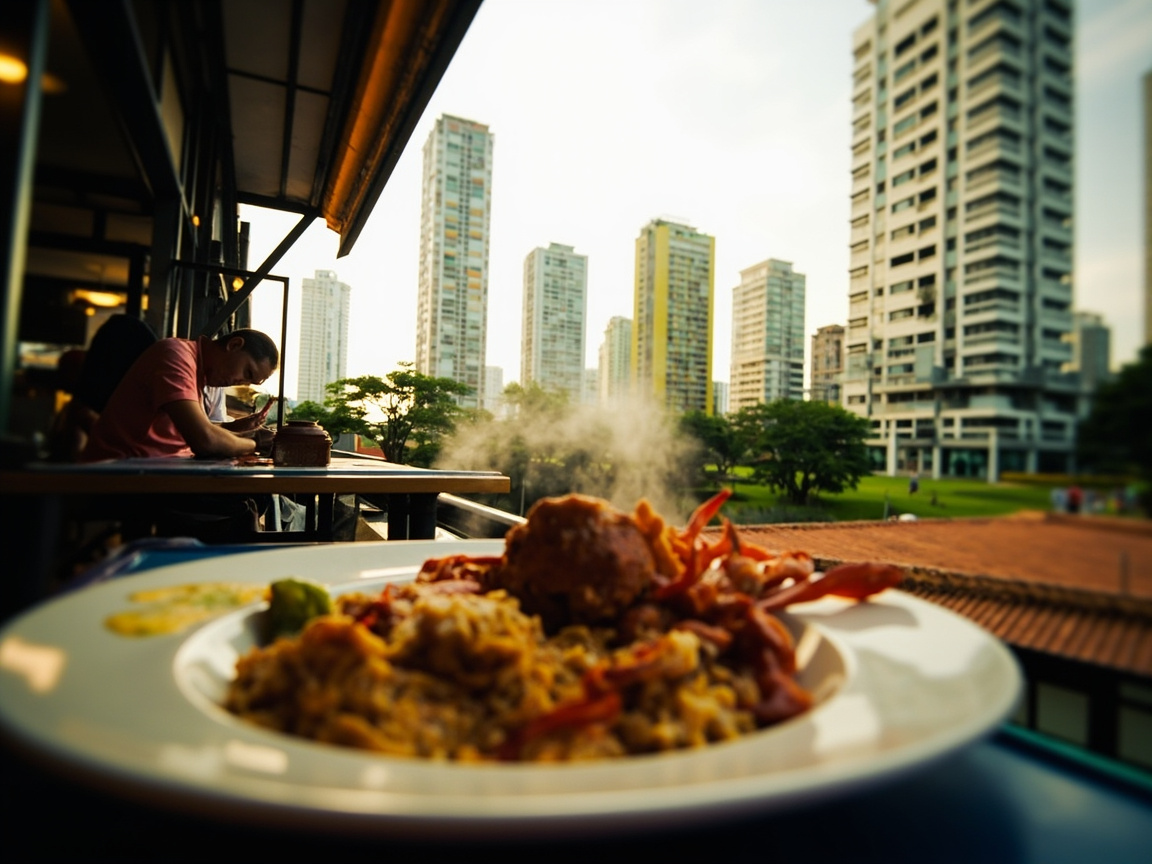
There's a stall near Bendemeer that does chilli crab bee hoon on weekends only, and the queue for it regularly stretches past the neighbouring stalls, out the void deck, and halfway to the carpark. I've stood in that queue more times than I'd probably admit to a nutritionist. Forty minutes, sometimes longer, for a plate of noodles I could technically make a passable version of at home in fifteen.
I used to think this was slightly irrational of me. Lately I've come around to thinking it might be one of the more rational things I do.
The queue is doing something the food alone can't
Singapore moves fast. Everyone I know is doing at least three things by 9am — checking Slack before they've had coffee, half-listening to a podcast on the MRT while replying to a text, eating lunch at their desk in eleven minutes flat because the next meeting doesn't care that they haven't eaten. Waiting forty minutes for noodles is, structurally, an act of rebellion against all of that.
You can't queue and multitask, not really. You end up people-watching. You end up chatting with the auntie behind you who's also decided this particular stall is worth the wait. You end up noticing the uncle running the stall — the exact same movements he's probably made ten thousand times, wok tilted at the same angle, the same three-second pause before he adds the crab. There's something almost meditative about being forced, by circumstance, to just stand there and pay attention.
It's also a small act of respect
A friend once pointed out to me that a lot of the best hawker stalls are one or two people, often older, doing everything by hand at a pace that hasn't really changed in decades. The queue isn't inefficiency — it's the actual cost of food made properly, by someone who isn't going to cut corners just because forty people are waiting. I've started to think of the wait less as an inconvenience and more as an honest price tag. You're not just paying $5 for the noodles. You're paying forty minutes of your day for the fact that nobody rushed the wok.
The wait is the tax you pay for someone refusing to hurry.
The social side nobody mentions
Some of my favourite small conversations of the past year have happened in hawker queues. An uncle telling me which stall used to be there before this one, twenty years ago. A tourist asking me, slightly panicked, whether it's rude to share a table with strangers (it isn't — it's basically expected). A kid loudly negotiating with his mother about ice cream while we all pretended not to listen and definitely were listening.
Hawker centres are one of the few genuinely mixed spaces left in Singapore — different ages, different income levels, different races, all sitting at plastic tables a foot apart, eating the same three dishes. The queue is where a lot of that mixing actually happens, because you're standing still long enough to notice the person next to you.
So, forty minutes for noodles
I'm not going to pretend every hawker queue is a profound experience. Sometimes it's just hot, and I'm hungry, and I regret my choices around the twenty-five minute mark. But often enough, it's the best part of the meal — the part where I'm forced to slow down in a city that doesn't naturally ask that of you. I'll probably keep queueing for that chilli crab bee hoon on weekends for as long as the stall exists. Some things really are worth the wait, even the mildly unreasonable amount of it.